
Black Med Texas · November 2026
Diabetes Eye Care for African American Families
Diabetic eye disease may begin without warning signs, making regular dilated eye exams and diabetes management important steps toward protecting vision.
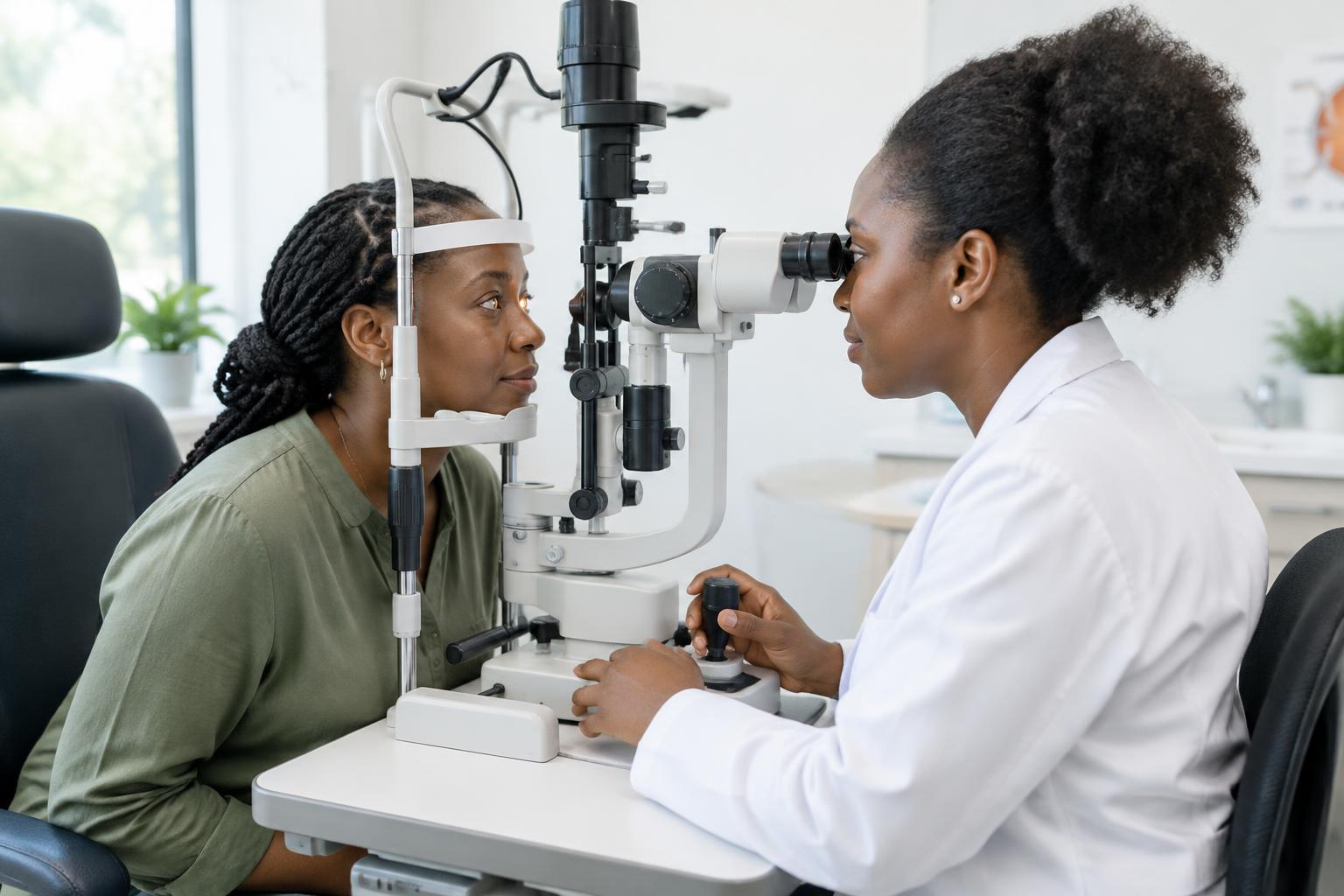
Black Med encourages African American readers living with diabetes to make eye care part of their health conversation. The sources below provide general diabetes eye care guidance; they do not establish a separate recommendation based on race.
Diabetic Eye Disease Month brings an important reminder: eye problems related to diabetes often have no early warning signs. Regular eye exams can help find problems early so people can receive timely treatment and follow up care. If you have diabetes, do not wait for a noticeable change in your eyesight before making eye care part of your health routine.
Diabetic retinopathy is an eye condition that can cause vision loss and blindness in people with diabetes. It affects blood vessels in the retina, the layer of tissue at the back of the eye that senses light. Early symptoms may be absent. Later symptoms can include blurry vision and floating spots, and the condition can lead to blindness.
The National Eye Institute recommends a comprehensive dilated eye exam at least once a year for people with diabetes. Finding diabetic retinopathy early can help you take steps to protect your vision. Optometrists and ophthalmologists are eye care specialists who help detect and treat eye diseases related to diabetes. Pay attention to changes in your vision, even when you already receive regular exams.
Diabetic retinopathy is the most common cause of vision loss among people with diabetes, but it is not the only eye concern. Diabetes also increases the risk of cataracts and glaucoma. Treatment options for diabetic retinopathy include injections, laser treatment, and surgery. Regular exams, timely treatment, and appropriate follow up care are important parts of protecting eye health.
Managing diabetes also matters for your eyes. Staying physically active, eating healthy foods, and taking your medicine can help prevent or delay vision loss. Managing blood glucose and overall health can reduce the risk of visual impairment. This November, remember to talk with a health professional about your diabetes care and when to schedule your next comprehensive dilated eye exam.
Sources
Written with AI from the listed sources for general information, not medical advice. Talk with a health professional about your own care.
Find a Black Med health professional